
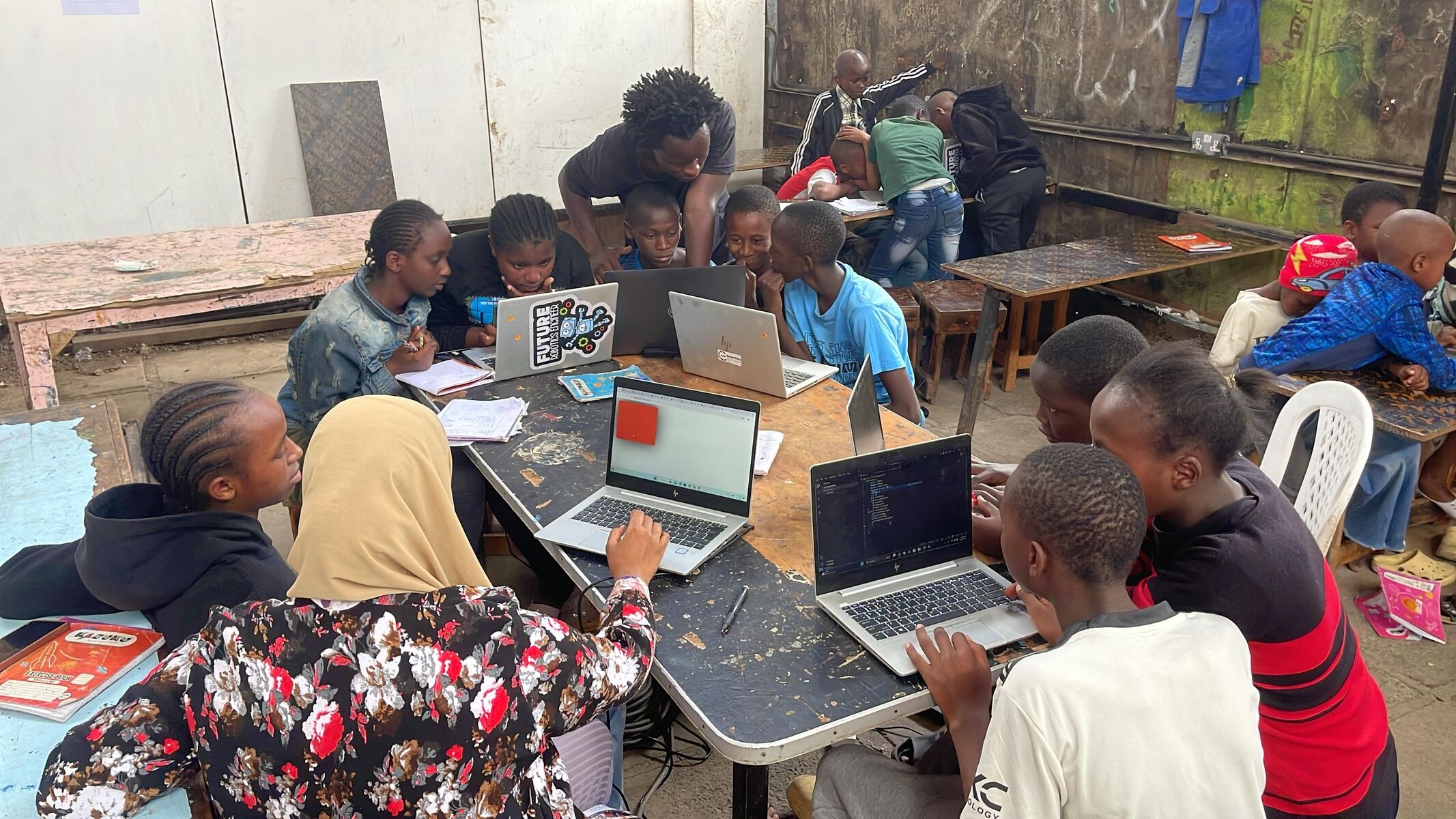
Teaching children how to code at CodeYetu happens in very real places. It happens in classrooms hosted by community organisations, in informal settlements, in a refugee camp, and in towns far from Kenya’s main technology hubs. It happens because trainers can show up consistently, because programs can run week after week, and because there is a reliable way to move money to the people doing the work.
CodeYetu is a small, community-based NGO in Kenya focused on teaching programming to children from marginalized communities. Its approach is practical. The organisation partners with existing institutions, works with local trainers, and prioritises hands-on learning. What determines how far the work can go is not ambition, but whether programs can be expanded without putting existing ones at risk.
In Kenya, access to computer science education remains uneven. Only about 43% of schools offer structured computer studies programs, with most of those schools located in higher-income areas. Children in low-income communities, informal settlements, and refugee settings are far less likely to encounter coding or digital literacy at an early age. For girls in particular, barriers such as poverty, displacement, and gender inequality further limit access to the digital economy.
CodeYetu works with children between the ages of 6 and 18, offering weekly in-person and virtual classes as after-school programs. Training is paired with mentorship, psychosocial support, and problem-solving projects rooted in real community challenges. Students are also enrolled in global and regional initiatives such as Technovation, the African Girls Can Code Initiative by UN Women, Hack Club, and locally driven hackathons.
As the organisation grew, the question became how to sustain this work without adding complexity.
Removing friction from how support moves
In 2024, CodeYetu was listed in the MiniPay donations miniapp. This did not involve funding from MiniPay as a company. It meant visibility and access. Through the MiniPay ecosystem, CodeYetu became discoverable to more than 11 million wallets across over 60 countries.
For donors, this made giving straightforward. Contributions could be made using local currencies and familiar payment methods, often with zero fees through select providers. For CodeYetu, it removed the need to manage multiple payment platforms or deal with international payment restrictions. Donations could be withdrawn into Kenyan Shillings at any time, at competitive market rates, and used directly within the organisation.
The same system is used to disburse funds locally. All trainers are onboarded and paid through MiniPay, reducing delays, fees, and administrative overhead. This created continuity and made it possible to plan programs with confidence that financial flows would hold.
Donations received through MiniPay are used directly to support program delivery. Funds are transferred from CodeYetu’s wallet to trainers’ wallets to cover essential costs such as airtime and travel, making it easier to run sessions consistently across locations.
As CodeYetu’s founder, Asha, explains:
“MiniPay has been very resourceful in assisting us to raise and disburse funds to our trainers all year long. All our trainers are now onboarded and receive payments via MiniPay.”
What expansion looked like on the ground
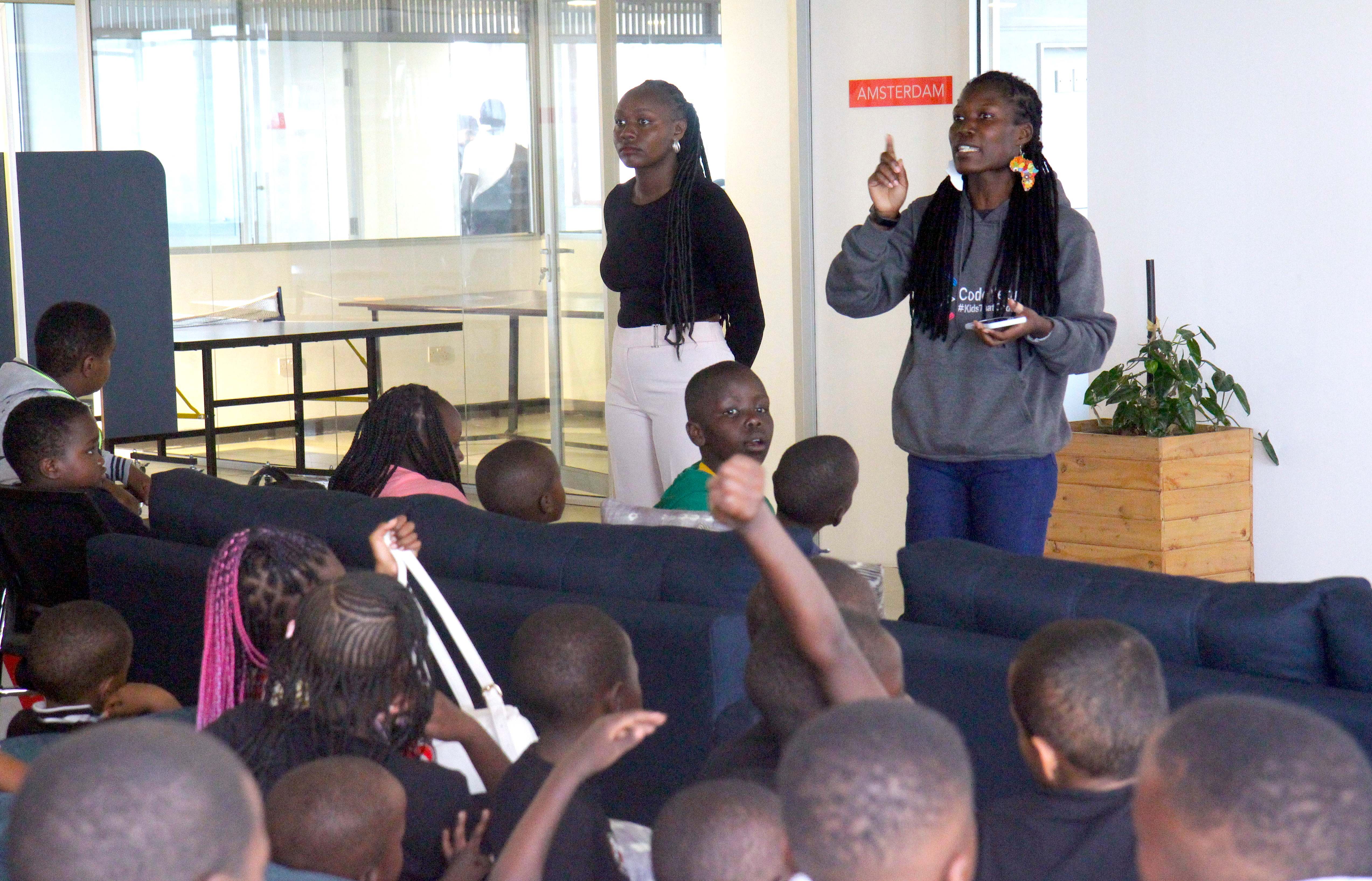
Following a successful hackathon earlier in the year, CodeYetu began expanding its activities. Over the course of the year, six new learning centres were added, each working with children already supported by local institutions:
- Stara Rescue Center, Kibera
- Wajukuu Art Center, Mukuru
- Kiserem Epilepsy Foundation, Mwihoko
- Kings and Queens, Kibera
- Kakuma Refugee Camp
- Pefa Nyagoro Child and Youth Development Center, Homabay
These partnerships allowed CodeYetu to reach children in very different contexts without creating new infrastructure from scratch.
To support this expansion, the number of trainers increased from 25 to 45. This ensured that new centres could be added without reducing the consistency of existing programs. Sessions could run in parallel, and trainers could maintain regular schedules.
Four hackathons were held during the year as part of the learning cycle. They served as opportunities for students to apply what they were learning, collaborate with peers, and work through problems in a more intensive format. For trainers, these sessions also offered a clearer view of how students were progressing across different locations.
Since 2018, CodeYetu has trained more than 2,000 students and currently supports over 700 active learners across 13 institutions, working with 45 trained mentors and trainers in refugee camps, rescue centers, informal settlements, and rural communities.
.jpg)
What changed and what did not
What connects these outcomes is a change in how support moves through the organisation. Donations made via MiniPay allow funds to move into CodeYetu from a global donor base and out to trainers in Kenya through a single system. Reducing friction at this level makes growth manageable for a small team with limited resources.
CodeYetu remains a small organisation. That has not changed. What has changed is the ability to operate with greater continuity. Support can translate more directly into teaching time, carefully added centres, and expanded access to coding education in communities where such opportunities are often limited.
Looking ahead, CodeYetu’s goal is to reach 100,000 children by 2030 through scalable, community-rooted partnerships that prioritise access, consistency, and local leadership.
Support coding education for children in Kenya
Your donation through MiniPay helps CodeYetu pay trainers, run consistent programs, and expand access to coding education for children in marginalized communities across Kenya.